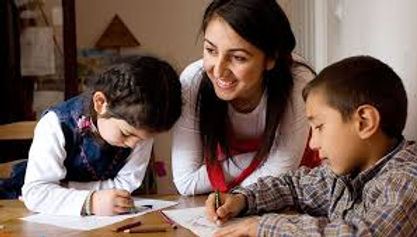
Parental Engagement
“Education is a triangle with three legs: parents, child, school and if any of the legs fall, the triangle falls as well.”
(Harris & Goodall, 2007, p. 2)
Tips for Meaningful Connections
•Ask parents what they need.
• Provide materials on ways to help children/youth at home.
• Routinely communicate news about progress – especially accomplishments and evidence of growth.
• Encourage a broad understanding of what it means to “help” – listening, reacting, praising, guiding, monitoring, discussing and (most important) asking questions that elicit conversation all count.
• Create classroom opportunities that call on parents and students to work together on tasks that have real-life applications.
• Display student work in public spaces such as libraries and malls to celebrate the value of what students are learning in the broader community
(Parent Engagement. Capacity Building Series K-12; October 2012).
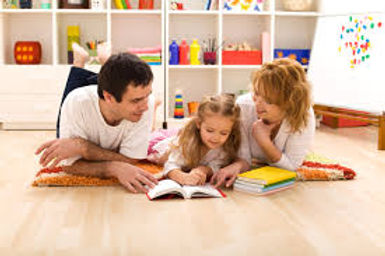
Engaging Parents
“Early care and learning settings and schools serve as places of dialogue in which community members discuss, share, and debate the values they hold about knowledge, education, and how to live well together in ways that are respectful, local, and meaningful.” (Early Learning Framework, p.12).
As you create these relationships and engagement with your families and students, you need to be able to offer an expanded version of involvement. “It is important for educators to concentrate on supporting them in their efforts to provide nurturing, learning environments for their children”. (Parent Engagement. Capacity Building Series K-12; p. 5).
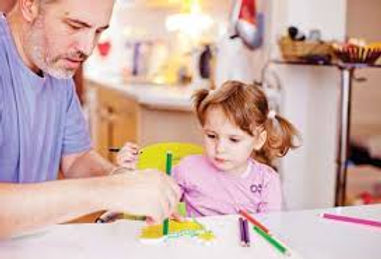
What I can bring
I strive every day to make my classroom a welcoming place. I will stand outside the door and welcome each student in the morning and say hello to each parent who walks their child to the door. “I am constantly thinking, does this convey the message that children come first in this setting? What does the arrangement of the furniture disclose? Is the space filled with child-sized furniture (rather than being dominated by a teacher’s desk)? Are there intimate areas where children can be alone, with a friend, or with a trusted adult”? (Hoelscher, p. 2).
I send home a "get to know you booklet" with each students family to learn about them on a more personal level find out their likes etc.
I like use Class Dojo as a means of making the students' learning visible. “As educators, we can work to make thinking much more visible than it usually is in classrooms. When we do so, we are giving students more to build on and learn from.” (Perkins, n.d., p.2). By making learning visible it allows students to feel proud of their accomplishments and its an easy way to communicate with families.